Software Engineer • Full Stack • Systems
DesignDevelopDeploy
I build backend systems, cloud infrastructure, and full-stack products that scale in production.
Dashboard
Contribution Graph
Testing Non-Deterministic Systems: Building ConvoSets for Production AI - III
2026-07-14Bengaluru
Open to Work
shivamjain.dev@gmail.com
Click to CopyExperience
Software Development Engineer
Deployed and operated MoE LLMs up to 27B parameters using vLLM and tensor parallelism.
LLMLLMvLLMBuilt reusable golden images and automated provisioning workflows for AWS bare metal and onprem KVM/QEMU environments, pre configuring Linux performance tuning, CPU affinity and kernel networking using Terraform and Ansible.
DevOpsAWSTerraformAnsibleBuilt a Cursor-like AI workstation for traders and quants where autonomous agents collaborated on market research, strategy generation, execution, and backtesting, reducing quantitative strategy development time by 40%.
LLMRead Deep DiveAgentsFinTech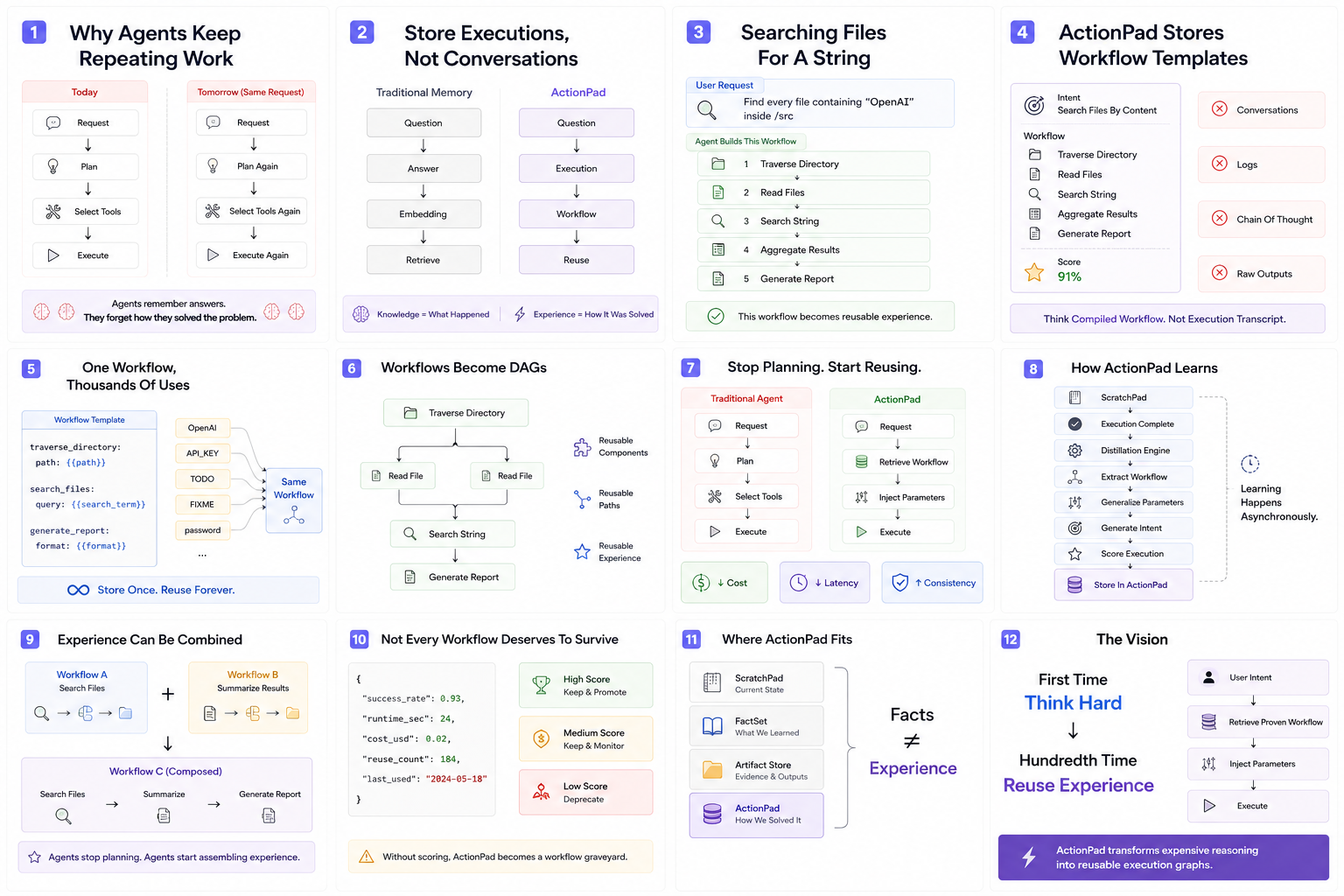 GeneralJune 15, 2026#UI#AI
The Action Composer: A Better Interface for AI Actions
A conversational pill-composer interface that maps natural language intents to clean, deterministic API schema execution.
Reduced infrastructure costs by $31.6K+ annually by building a cross-platform x86-to-ARM migration pipeline for C++/Rust services and optimizing AWS compute, ECS, RDS, and Aurora workloads.
DevOpsDevOpsAWSC++RustBuilt Terraform/Terragrunt modules for multi-cloud trading infrastructure across AWS and GCP, provisioning Kubernetes clusters, networking, IAM, ingress/egress gateways, and client environments through reproducible GitOps deployments using ArgoCD, Helm, and Karpenter.
DevOpsTerraformKubernetesArgoCDHelmDesigned a context optimization framework for long-running AI agents using hierarchical summarization, vectorized memory, and Qdrant-based retrieval, reducing token consumption and inference costs by 30–60%.
LLMRead Deep DiveLLMQdrantRAG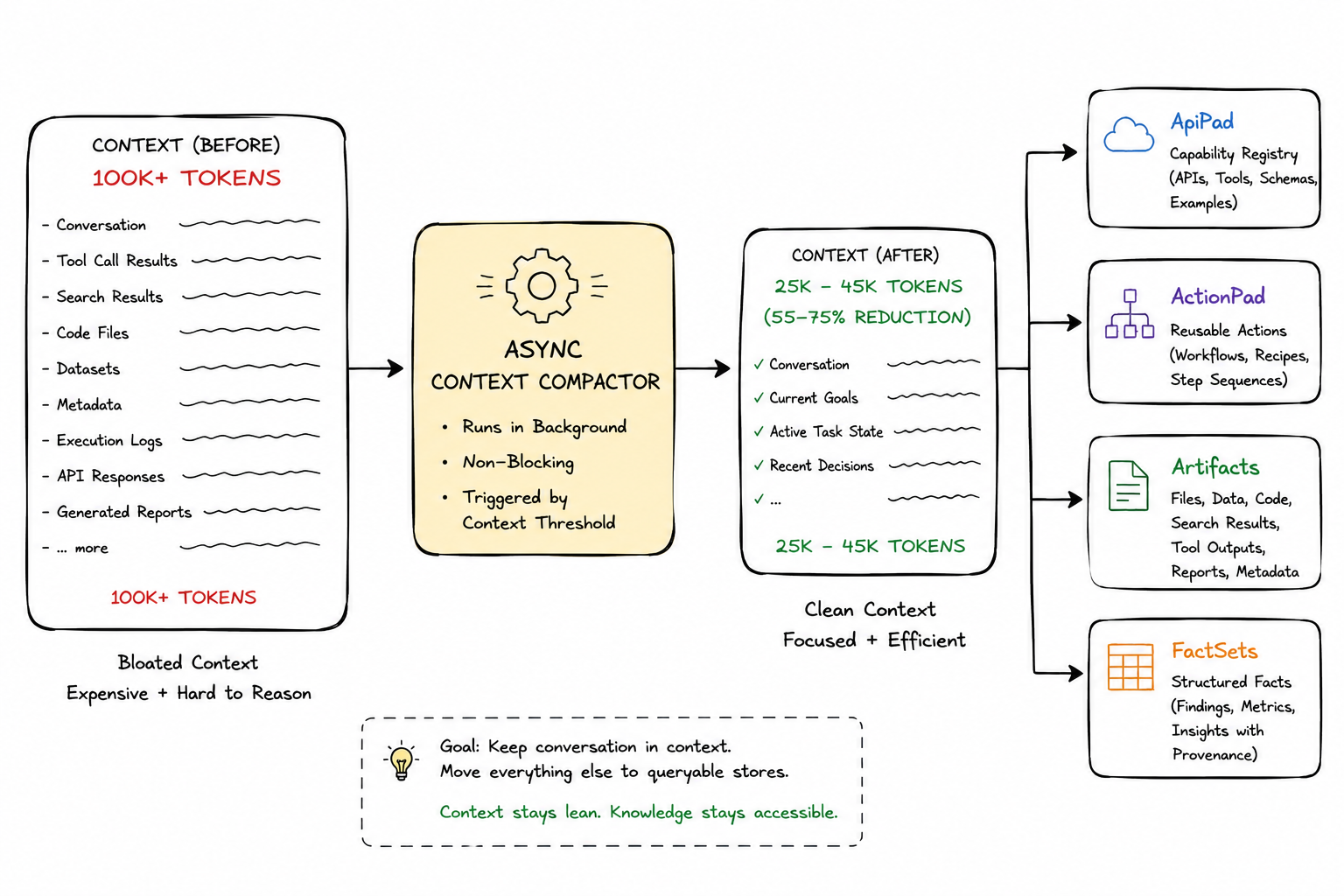 GeneralJune 14, 2026#AI
Async context compactor: Token compaction, the why and how
Continuous background token-compaction strategy for long-running agents, reducing context sizes by 55-75%.
Built evaluation, observability, and inference infrastructure using LLM-as-a-Judge pipelines, conversation datasets, trace collection, GPU scheduling, and regression detection for production AI systems.
LLMLLMOpsObservabilityOptimized real-time trading interfaces processing 300+ WebSocket updates per minute through Canvas rendering, bounded queues, rendering optimizations, and memory management techniques, eliminating UI lag and memory leaks.
FrontendWebSocketsReactCanvasBuilt a C++ low latency pre-trade risk engine supporting $100M+ trading volume, enforcing margin checks, leverage limits, exposure controls, and duplicate order prevention across multiple exchanges.
TradingC++Low LatencyBuilt real time post trade analytics and reconciliation infrastructure using Python to validate executions, positions, balances, and fees while detecting exchange to internal state mismatches.
TradingTradingPythonProvided primary operational support for cloud and bare-metal trading infrastructure, performing incident triage, root cause analysis, and restoring trading operations within 45 minutes during critical production outages.
DevOpsSREOperationsImplemented algorithmic execution and risk management workflows including TWAP, VWAP & trailing stop loss.
TradingTradingAlgorithmsDeveloped exchange connectivity and execution infrastructure for a multi-exchange OEMS, integrating REST, FIX WebSocket APIs for market data ingestion and order routing across 20+ trading venues.
TradingFIXAPIsWebSocketsReverse engineered undocumented exchange workflows through API analysis, source code inspection, protocol specifications, and blockchain interactions, including recreating dYdX margin and leverage operations where public documentation was incomplete.
TradingReverse EngineeringAPIsOptimized analytics workloads through PostgreSQL query tuning, indexing strategies, rolling aggregations, and Redis.
BackendRead Deep DivePostgreSQLRedisDatabase Tuning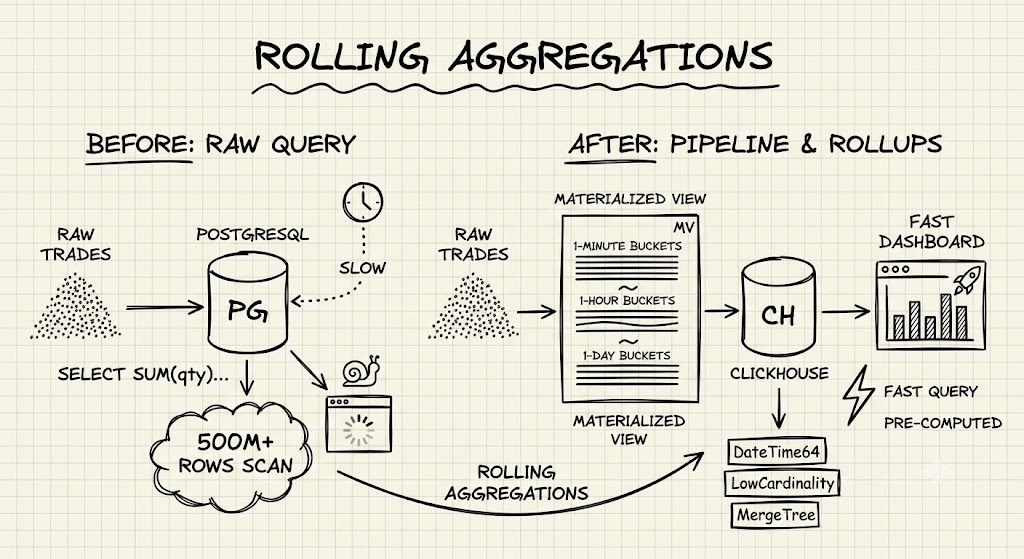 GeneralJuly 12, 2026#ClickHouse#PostgreSQL
Rolling Aggregations: Building Fast Post-Trade Analytics with ClickHouse
Understanding rolling aggregations, analytical databases and why production analytics systems never query raw market data.
Designed a secure credential brokerage platform using Go and OpenBao, abstracting exchange API credentials behind internal identities while providing auditing, account allocation, access control, and transaction traceability.
BackendGoSecurityOpenBaoReduced frontend memory consumption by 60%, build times from 25 minutes to 3 minutes, and release bugs from 8 to 0 per cycle by redesigning frontend architecture, introducing 600+ automated tests, and implementing performance-focused build pipelines.
FrontendReactPerformanceTestingBuilt end-to-end testing, CI/CD, and stress-testing frameworks using GitHub Actions, Playwright, remote caching, and high-frequency workload simulation to improve release reliability and identify scalability bottlenecks before production deployment.
DevOpsPlaywrightCI/CDTesting
Projects
02 / 02Intui
PaperLM
Intui
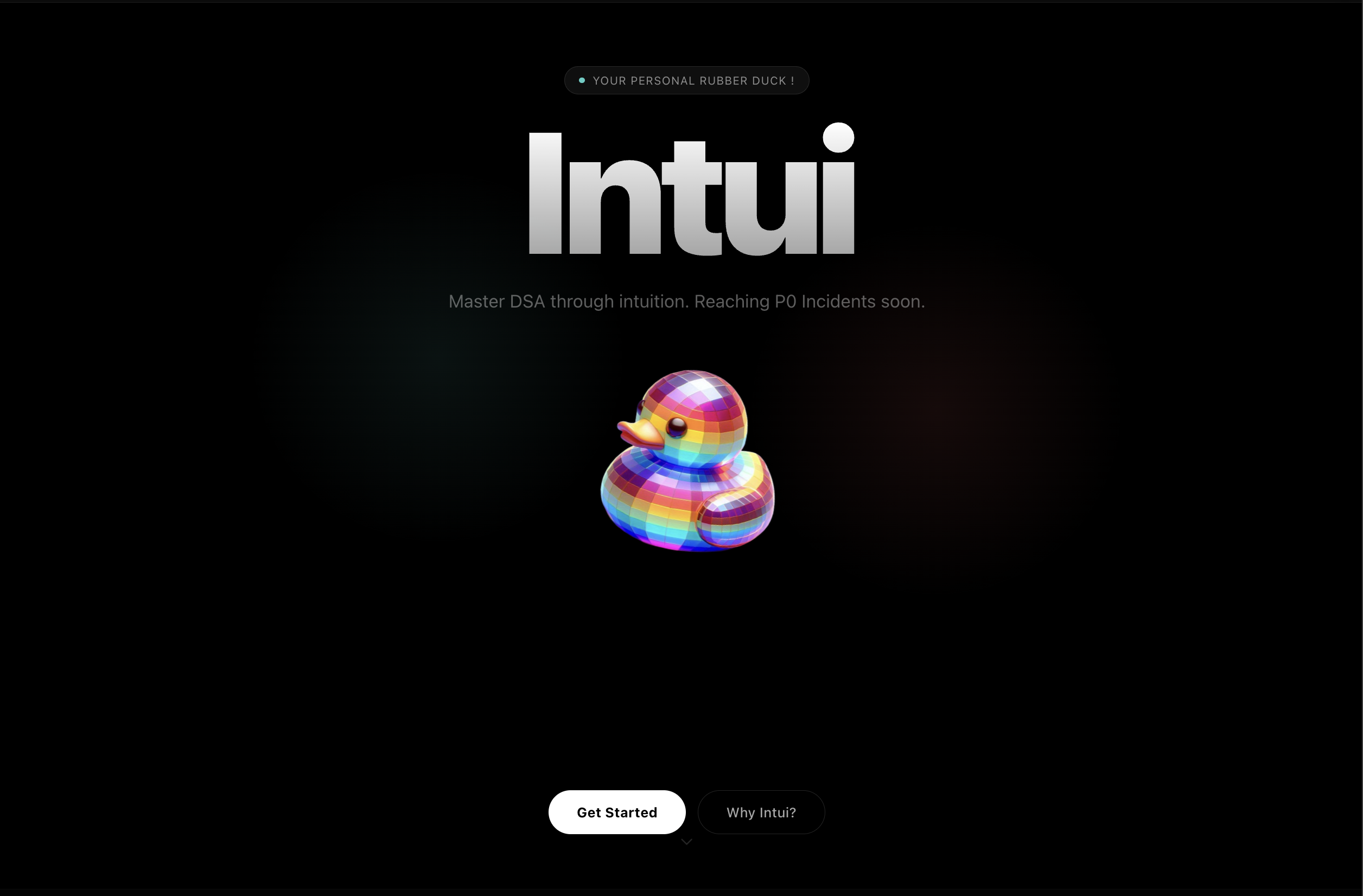
Secure online code execution platform with Docker sandboxing.
PaperLM
RAG-based PDF Chatbot built with LangChain and Pinecone.